CranioSacral Therapy
Gentle touch, deep effect. Harness the power of your body's “inner ocean” to release stress and tension, restore balance, and gain healthy resilience.
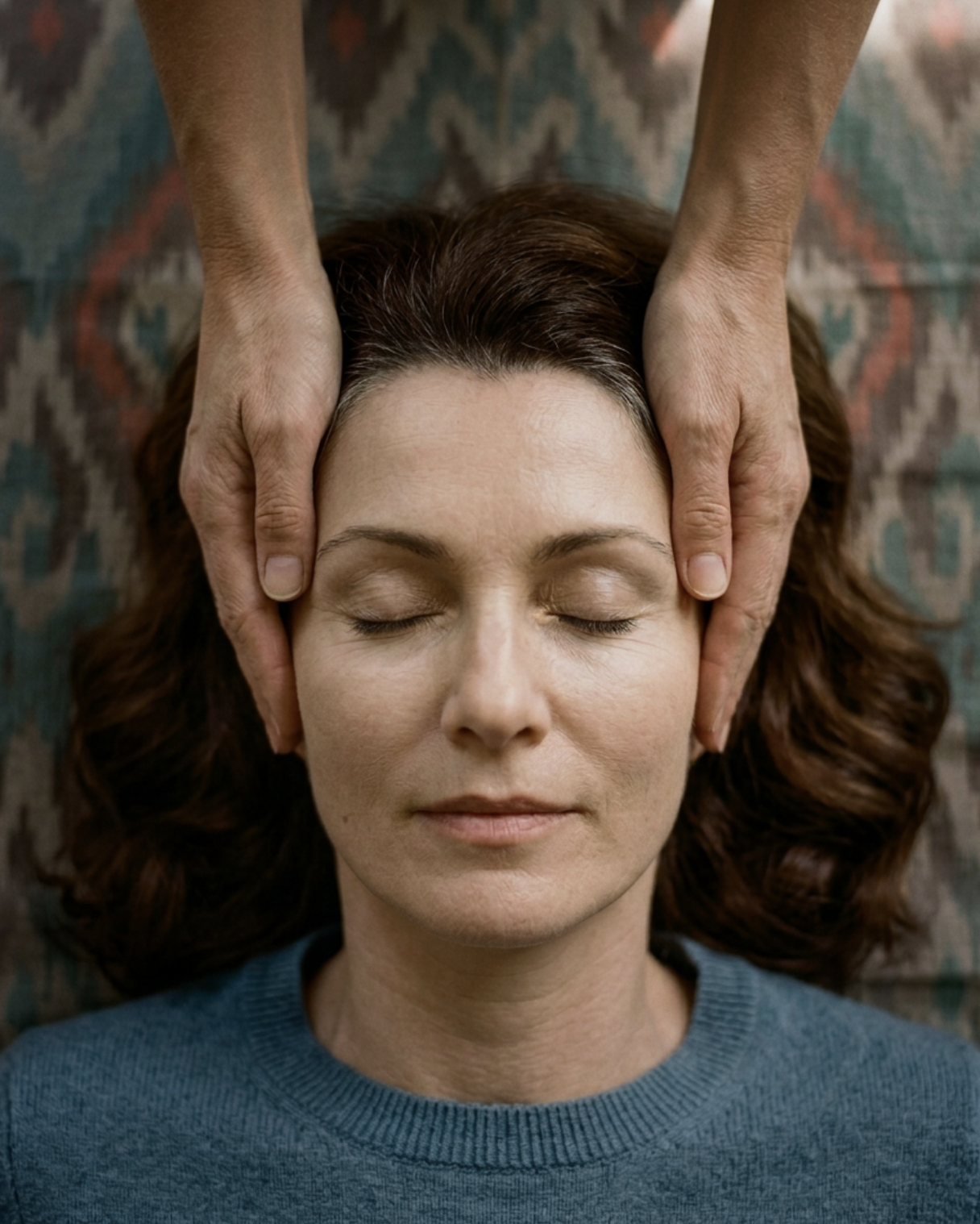
CranioSacral Therapy (CST) is a gentle touch therapy that enhances the flow of cerebrospinal fluid around your brain, spinal cord, and connective tissue (fascia). This fluid is produced in the brain, creating a slow rhythmic pulse as it circulates, like the ocean’s ebb and flow.
CST works to enhance the flow of this fluid. Much like stones that divert water in a stream, flow patterns reveal tension or restrictions held in your body. CST uses gentle techniques that encourage this fluid flow — to unwind tension, regulate your nervous system, reduce pain, restore balance, and speed recovery.
What to Expect
Sessions last for 75 minutes on a massage table, fully clothed. Using light to moderate touch, I’ll track the CranioSacral rhythm at various points on your body. I follow subtle cues in your tissues to identify where release is needed, and the order in which to apply techniques.
Clients Report:
Tension release; softer, longer tissues
Postural realignment
Centering and grounding
Deep calm, mind and body
Easier movement, less pain
Expanded body awareness
Many people use CST for stress relief, pain reduction, and immune support. Bear in mind, chronic tensions can take time to release, especially if long-established. A series of 3 sessions typically shows progress and indicates whether continued therapy is worthwhile.
Learn about the history of CranioSacral Therapy below.
Got questions? Email Me
CranioSacral has proven effectiveness for:
Acute or chronic aches/tension
Local or systemic inflammation
Migraines and headaches
Stress, anxiety, depression, grief, PTSD
Nervous system impairments
Brain/spinal cord injuries
Chronic or adrenal fatigue
Post-injury or post-surgical recovery
Jaw or orthodontic issues
Structural imbalances
Sleep disturbances
Prenatal or postpartum transitions
Feeling the CranioSacral Rhythm
Imagine floating your relaxed, receptive hands in water at the shoreline. You can perceive a variety of patterns: ebb and flow, layered tides, swirling, currents, even effervescence. The CranioSacral rhythm or pulse is subtle, but feels much the same. Its subtle motion rocks every cell in the body. CST uses light touch to sense movement (or lack of) in the cerebrospinal fluid and helps to revitalize the natural flow of our “inner ocean”.
CranioSacral Therapy Sessions
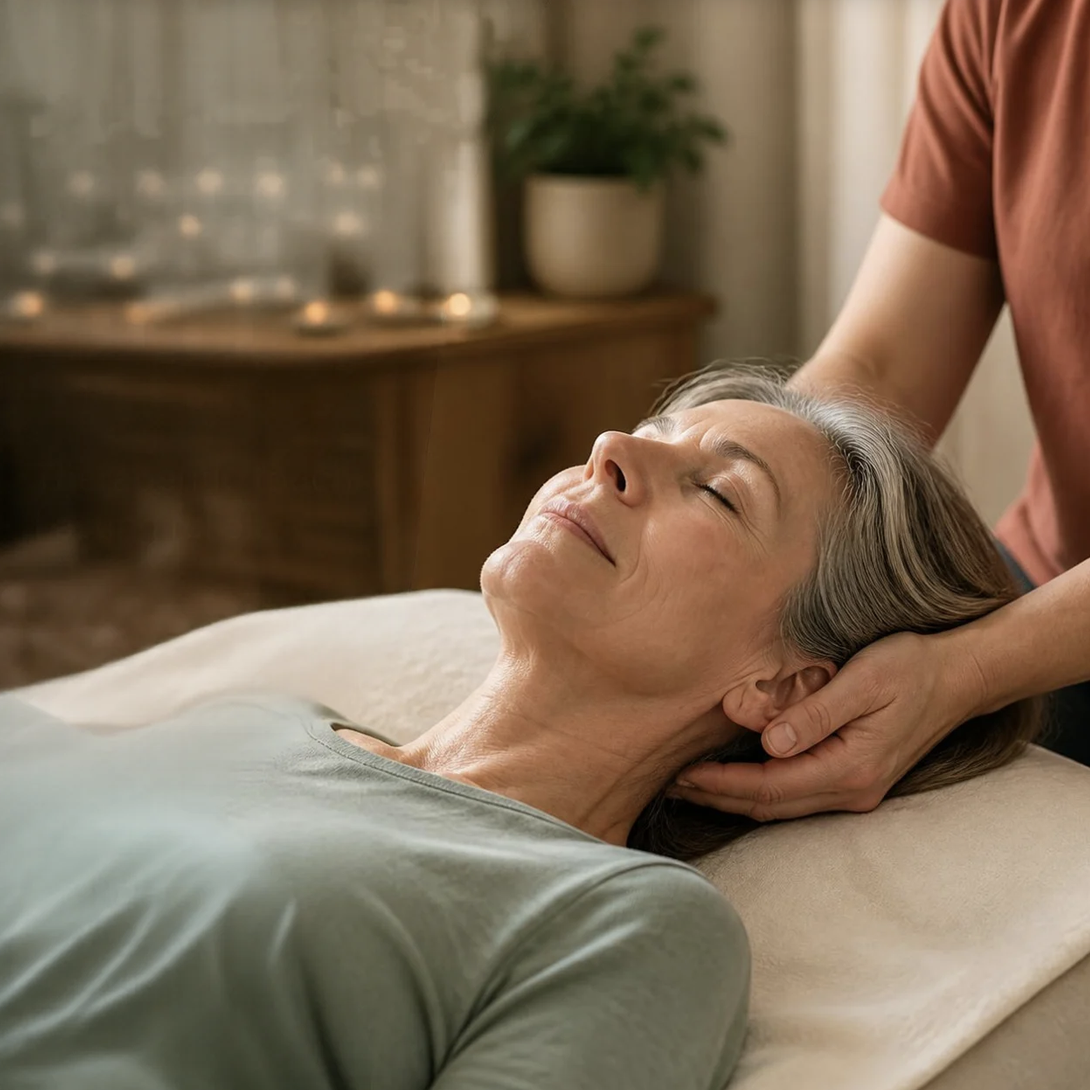
75 Minutes is the ideal session length — long enough to support the whole body, without getting restless on the table. In addition to this session time, 10-15 minutes of consult or education time are included at the start and end of every session.
LOCATION: In-Person sessions held in Frankfort, MI.
This remote/virtual option includes a brief consultation to discuss your needs and goals, followed by 1 hour of distance CranioSacral Therapy. We’ll reconnect for a few minutes afterwards, for observations, suggestions, or questions, if you choose.
Location: ONLINE — choose by phone or by video call.
The History of CranioSacral Therapy
CranioSacral Therapy (CST) stands on the shoulders of Osteopathy, which carries the influence of indigenous Shawnee healing traditions — too often left out of the story. In the 1850s, Dr. Andrew Taylor Still (the father of Osteopathy) lived among the Shawnee people while apprenticing under his missionary-physician father. He learned the Shawnee language and their healing methods, including herbal remedies, joint manipulation, touching cranial bones, and working with breath, energy, and healing ceremonies. He claimed to have learned all they could teach him about healing.
Many principles that Dr. Still later built into Osteopathy echo the Shawnee worldview: that body/mind/spirit are one, that the body holds its own capacity to heal, and that a healer's role is to observe closely and support that process. He called this quiet way of observing "taking an Indian look”. This receptive listening and attunement to the body runs through the methodology of both Osteopathy and CST today.
Two more physicians carried the work forward. Dr. William Sutherland, a student of Still's, developed Cranial Osteopathy in the early 1900s after discovering that the skull's sutures are built for subtle movement, allowing it to "breathe." In the 1970s, Dr. John Upledger, while assisting a spinal surgery, noticed the membranes around the spinal cord pulsed rhythmically, discovering a hydraulic system that circulates cerebrospinal fluid. His osteopathic research at Michigan State University led him to develop cranial manipulation techniques, and he later founded the Upledger Institute, a respected training facility for CST. This field continues to expand through new techniques and research that supports CST’s effectiveness as an aid to healing.
Personal note: I feel a call to this work that’s tinged with synchronicity — a few years ago, genealogy revealed my distant relation to Shawnee Chief Cornstalk (through my mother’s line). By coincidence, my parents called me "Shawnee” as a child. Also, I was born in Michigan the year that Dr. Upledger's research began at MSU. I offer CST sessions with respect and gratitude for the healing wisdom of my ancestors, and I’m proud to ground my work in Michigan, the birthplace of modern CST.